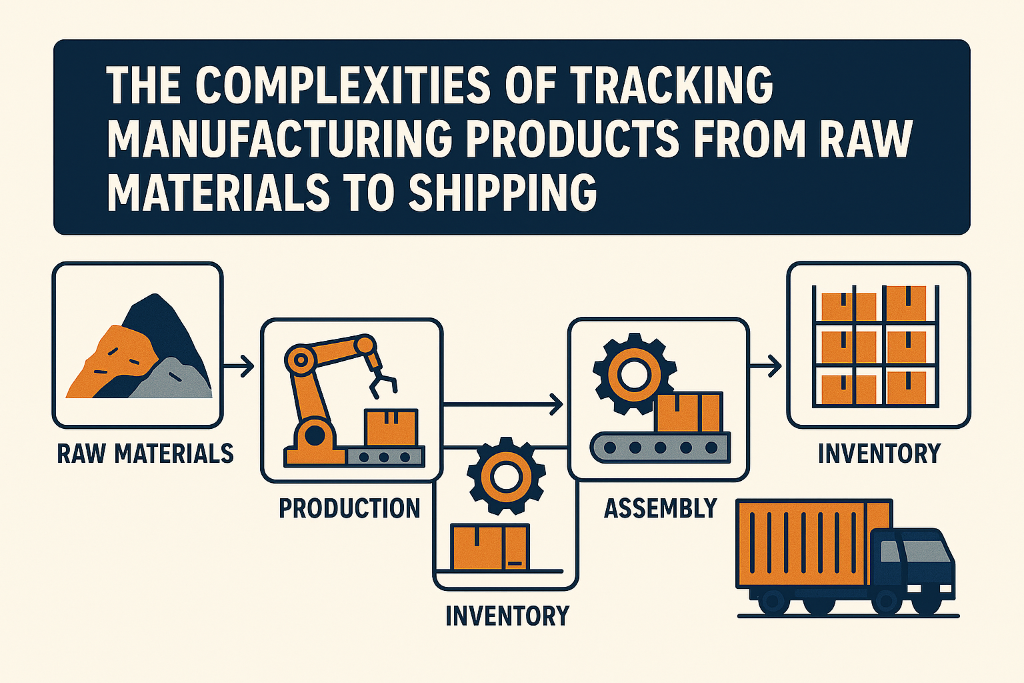
Tracking manufacturing products from raw materials to shipping is a multifaceted process requiring meticulous planning, robust systems, and seamless coordination. This post explores the systems, costs, and department use cases that make it all work.
The Tracking Process
1. Raw Materials Management
- Inventory Tracking: Ensuring that raw materials are available when needed — includes real-time tracking of inventory levels, reordering points, and supplier lead times.
- Quality Control: Raw materials must meet quality standards before entering the production process, requiring rigorous testing and documentation.
2. Production Tracking
- Work-in-Progress (WIP) Tracking: Monitoring the status of products as they move through various stages of production helps identify bottlenecks and optimize workflows.
- Batch and Lot Tracking: Assigning batch or lot numbers to products ensures traceability, which is essential for quality control and regulatory compliance.
3. Finished Goods Tracking
- Inventory Management: Finished products must be tracked in real-time to manage stock levels, prevent overproduction, and ensure timely fulfillment of orders.
- Shipping and Logistics: Coordinating the shipping process involves tracking products from the warehouse to the customer or distributor, ensuring timely and accurate deliveries.
Systems That Help with the Process
Manufacturing Execution Systems (MES)
- Functionality: MES systems manage and monitor work-in-progress on the factory floor. They provide real-time data on production activities, machine performance, and labor utilization.
- Popular Brands: FactoryTalk, ShopVue, ShiftWorx
Enterprise Resource Planning (ERP) Systems
- Functionality: ERP systems integrate various business processes, including inventory management, production planning, and order fulfillment, providing a unified view of operations.
- Popular Brands: SAP, Oracle, Microsoft Dynamics
Inventory Management Systems
- Functionality: These systems track inventory levels, manage reordering, and ensure optimal stock levels. They often integrate with MES and ERP systems.
- Popular Brands: Katana, Fishbowl, NetSuite
Barcode and RFID Systems
- Functionality: These systems use barcodes and RFID tags to track materials and products throughout the supply chain, providing real-time data on location and status.
- Popular Brands: Zebra Technologies, Honeywell, Avery Dennison
System Costs and Maintenance
Initial Costs
- Software Licenses: Vary significantly based on system complexity and number of users.
- Hardware: Includes servers, barcode scanners, RFID readers, and other necessary equipment.
Ongoing Costs
- Subscription Fees: Many systems operate on a subscription basis, with monthly or annual fees.
- Maintenance and Support: Regular maintenance includes software updates, hardware repairs, and technical support.
Implementation Costs
- Customization: Tailoring the system to meet specific business needs can incur additional costs.
- Training: Employees need training to effectively use the new systems, involving both time and financial investment.
Use Cases by Department
- Production: Uses MES systems to monitor real-time production data, identify bottlenecks, and optimize workflows for efficient resource use and timely order completion.
- Quality Control: Relies on batch and lot tracking to trace the history of raw materials and finished products, facilitating prompt identification and resolution of quality issues.
- Inventory Management: Uses inventory systems to maintain optimal stock levels, manage reordering, and prevent stockouts or overstock situations.
- Shipping & Logistics: Uses barcode and RFID systems to track products from the warehouse to the customer, ensuring accurate and timely deliveries.
What is an MES?
A Manufacturing Execution System (MES) acts as a bridge between ERP systems and actual manufacturing operations. It provides real-time data and control over the production process, ensuring manufacturing activities are executed efficiently.
Key Functions of an MES
- Data Collection and Integration: Collects data from machines, sensors, and operators to provide a comprehensive, up-to-date view of the manufacturing environment.
- Production Scheduling: Generates production schedules based on orders, resource availability, and priorities. Assigns work orders to operators and tracks progress in real-time.
- Quality Management: Captures quality data during production, enforces quality control procedures, and triggers alerts for issues.
- Inventory and Material Management: Tracks the movement of materials throughout the production process and initiates replenishments as needed.
- Performance Analysis: Analyzes data to generate reports, dashboards, and visualizations for informed management decisions.
Benefits of an MES
- Improved Quality Control: Real-time quality data allows for immediate corrective actions, reducing waste and rework.
- Increased Uptime: Optimizes production schedules and maintenance to maximize equipment utilization.
- Reduced Inventory Costs: Accurate inventory data helps reduce excess stock and associated costs.
- Enhanced Traceability: Tracks the entire production cycle for full traceability — crucial for regulatory compliance.
- Paperless Operations: Eliminates paperwork, reduces human error, and ensures data is immediately available.
Popular MES Brands in the USA
- FactoryTalk (Rockwell Automation): Known for robust integration capabilities and real-time data analytics.
- ShopVue (Casco Systems): Offers comprehensive shop floor control and labor management features.
- ShiftWorx (Memex): Focuses on real-time machine monitoring and OEE tracking.
Integrating MES with ERP
Integrating MES with ERP systems is crucial for streamlining operations and ensuring seamless data flow.
Integration Methods
| Method | Advantages | Disadvantages |
|---|---|---|
| Batch Integration | Reduces system load | Not real-time; risk of data loss |
| Real-time Integration | Immediate synchronization | Resource-intensive |
| Middleware Integration | Bridges different systems | Additional cost; third-party dependency |
| Cloud-based Integration | Scalable; less on-premises infrastructure | Requires internet; data security concerns |
| Custom API Integration | Highly customizable | Significant development effort |
| Point-to-Point Integration | Simple to set up | Scalability issues |
Benefits of MES–ERP Integration
- Real-time data synchronization for faster decision-making
- Improved visibility across the entire manufacturing lifecycle
- Enhanced quality management through data analysis
- Reduced human error via automated data processing
- Optimized production planning and resource allocation
ERP Cost Breakdown for 500 Employees
| System | Annual Software Cost | Implementation Cost |
|---|---|---|
| Oracle NetSuite | ~$594,000/yr ($99/user/mo) | $150,000–$750,000 |
| Microsoft Dynamics 365 | ~$420,000/yr ($70/user/mo) | $100,000–$500,000 |
| Acumatica Cloud ERP | $1,800+/mo (base) | $75,000–$500,000 |
| SAP Business One | ~$600,000/yr ($100/user/mo) | $100,000–$500,000 |
| Odoo | ~$144,000/yr ($24/user/mo) | $50,000–$200,000 |
Conclusion
Tracking manufacturing products from raw materials to shipping is complex but essential for ensuring efficiency, quality, and customer satisfaction. By leveraging MES, ERP, and inventory management systems, companies can streamline operations, reduce costs, and maintain high standards of quality.
Choosing the right system depends on your specific business needs, budget, and the level of customization required. It's essential to consult with vendors to get precise quotes and understand the full scope of implementation costs.
Derris Boomer — VP of Sales, BTG
📧 derrisboomer@btgsi.com 📞 732-800-2058 🌐 btgsi.com 📅 Schedule a Meeting