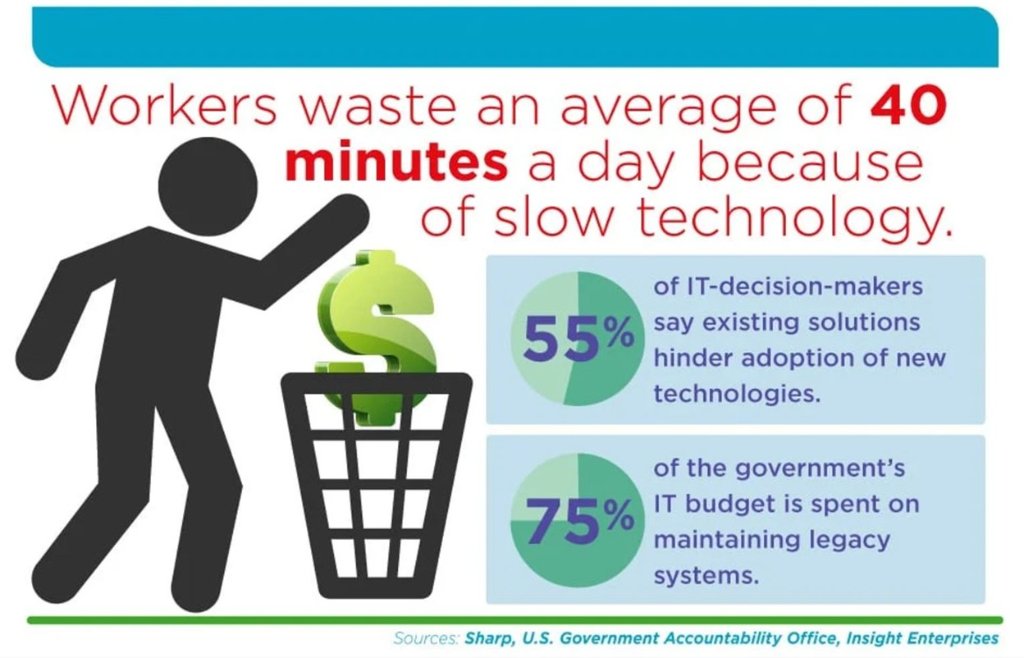
Many U.S. companies are still grappling with outdated IT systems that significantly hamper operations. The financial impact is staggering — from $1M/hour downtime costs to 22+ minutes of lost productivity per employee per day.
The Financial Toll of Outdated IT Systems
In today's fast-paced business environment, technology is the backbone of productivity and efficiency. However, many U.S. companies are still grappling with outdated IT systems, which significantly hamper their operations. The financial impact of these antiquated systems is staggering, affecting everything from employee productivity to overall revenue.
1. Downtime Costs
One of the most direct impacts of outdated IT systems is downtime. According to a recent report, businesses lose an average of 14.1 hours annually due to IT downtimes. This downtime translates to a significant loss in productivity, with an estimated 545 hours of staff productivity lost each year. For large enterprises, the cost of downtime can exceed $1 million per hour.
2. Maintenance Expenses
Maintaining old IT systems is not only time-consuming but also costly. For instance, the U.S. government spends about 80% of its $100 billion annual IT budget on maintaining outdated equipment. This scenario is mirrored in the private sector, where companies often allocate a substantial portion of their IT budgets to keep legacy systems running.
3. Lost Productivity
Employees lose an average of 22 minutes per workday dealing with technology-related issues. Over a year, this amounts to more than two weeks of lost productivity per employee. When multiplied across an entire organization, the financial impact is substantial.
4. Security Risks
Outdated systems are more vulnerable to cyberattacks. The average cost of a data breach in the U.S. is estimated at $9.44 million. Companies relying on unsupported software and hardware are at a higher risk of such breaches, which can lead to significant financial and reputational damage.
The Broader Impact on Business Operations
Customer Satisfaction
System downtimes and slow performance can lead to poor customer experiences. In today's competitive market, customers expect seamless interactions. Any disruption can result in lost sales and diminished customer loyalty.
Competitive Disadvantage
Companies using outdated IT systems often struggle to keep up with competitors who have invested in modern technology. This lag can result in missed opportunities and a weakened market position.
Compliance Issues
Many industries have strict regulatory requirements for data security and system reliability. Outdated IT systems can make it challenging to comply with these regulations, leading to potential fines and legal issues.
Mitigating the Impact
To mitigate these impacts, companies should consider investing in modern IT infrastructure. This includes:
- Upgrading hardware to current-generation equipment
- Adopting cloud solutions for scalability and reliability
- Implementing robust cybersecurity measures to protect against breaches
- Regular maintenance and updates to ensure systems run smoothly and securely
Conclusion
The cost of maintaining outdated IT systems is far-reaching, affecting productivity, security, and overall business performance. By investing in modern technology, companies can not only enhance their operational efficiency but also secure a competitive edge in the market. The initial investment in upgrading IT infrastructure is outweighed by the long-term benefits of reduced downtime, improved productivity, and enhanced security.
By addressing the hidden costs of outdated IT systems, businesses can pave the way for a more productive and secure future. What steps is your company taking to modernize its IT infrastructure?
Derris Boomer — VP of Sales, BTG
📧 derrisboomer@btgsi.com 📞 732-800-2058 🌐 btgsi.com 📅 Schedule a Meeting